A Northbound Trip Ended in the Median
Holiday trips usually start with coolers, packed bags, and a route mapped out ahead of time. They do not usually include a camper breaking loose and spreading debris across the highway. That is how one northbound drive became an I-95 camper towing recovery. State Highway Patrol called our tow truck service to tackle the fallout.
This Camper Came Apart at the Seams
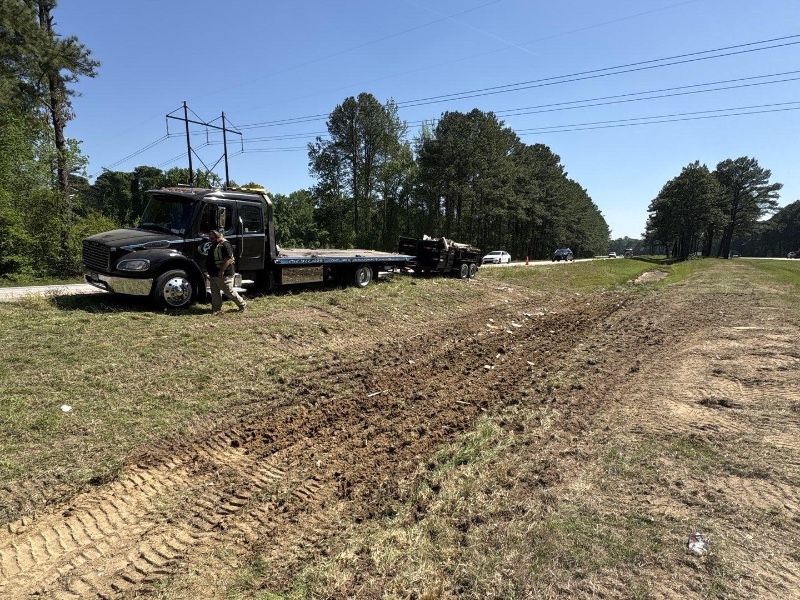
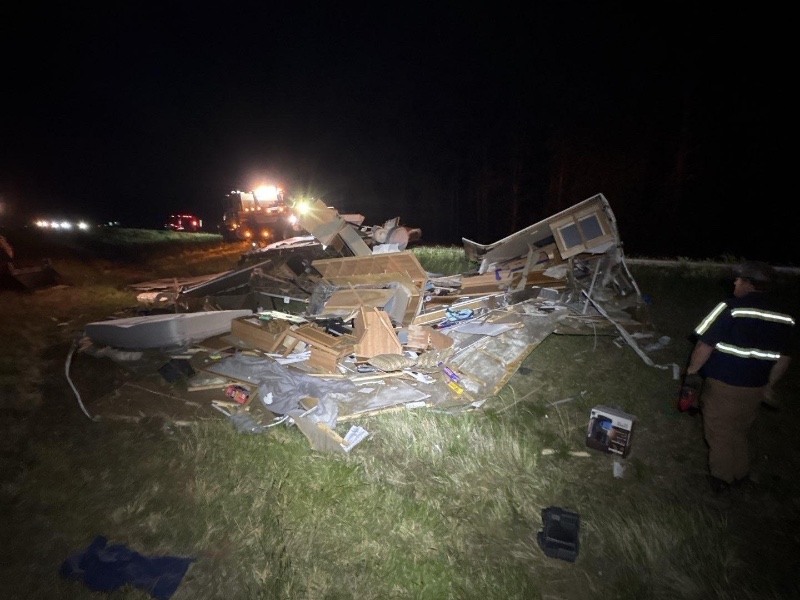
The camper traveled north on I-95, just outside Wilson. It suddenly started swaying behind the tow vehicle, then separated from the hitch, before rolling into the median. The camper broke apart as it flipped, scattering pieces across the highway and forcing traffic down to one lane.
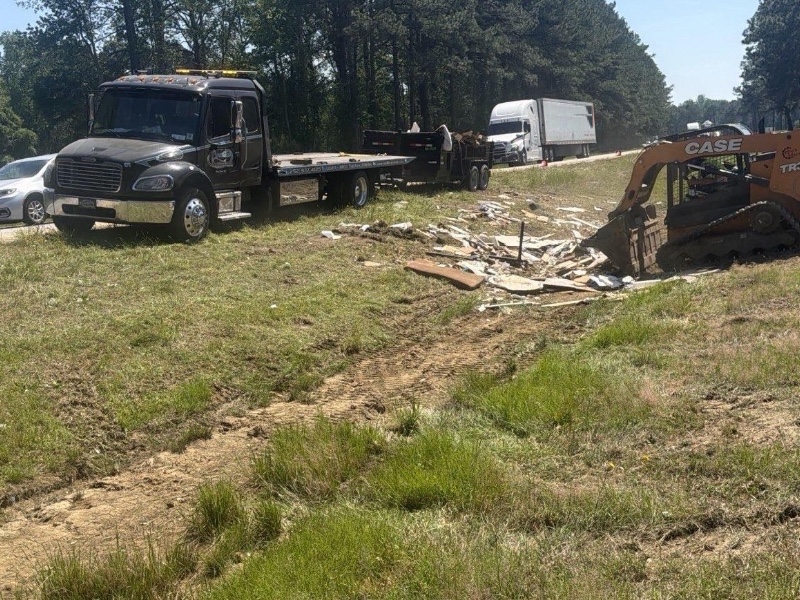
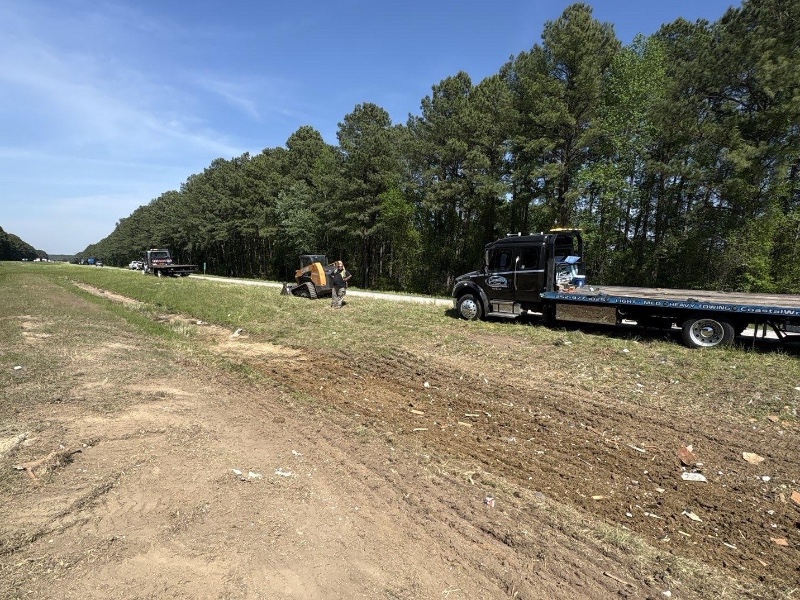
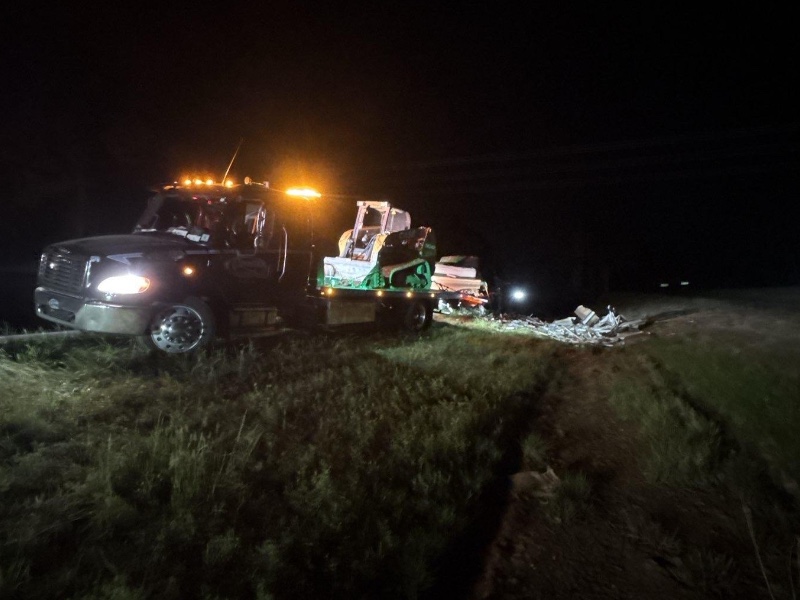
Three of our operators responded with a 30-ton wrecker and two rollbacks. One rollback brought the skid steer with a grapple bucket, and the other picked up the dump trailer. The damaged vehicle was only part of the problem. Walls, roof panels, insulation, and smaller pieces were spread across an active interstate.
Clearing the Travel Lanes Came First
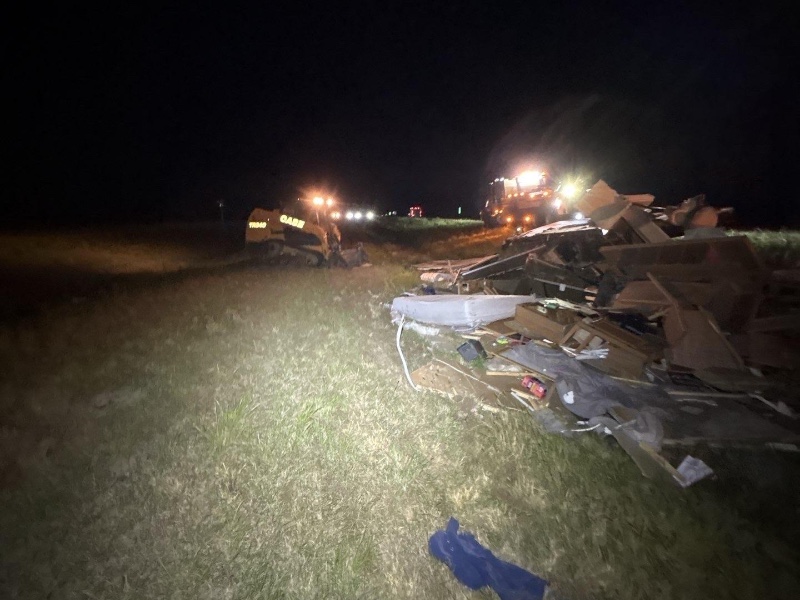
Our first job was getting debris out of the open lanes. Traffic was already backing up, and drivers passing through a crash scene tend to slow down and look. We used the skid steer to push the larger pieces onto the shoulder so State Highway Patrol could begin opening more of the roadway.
That gave us room to work on the camper frame without debris sitting in the path of traffic. We did not try to sort every piece at that point. The highway needed to move again. The detailed cleanup could wait until there was daylight and less pressure from passing vehicles.
Uprighting What Was Left of the Camper
The camper frame had come to rest on its side in the median. We rigged it to the 30-ton wrecker, brought it back onto its wheels, and connected it for transport. A damaged frame can no longer carry weight the way it did before the rollover. That’s why we watch the attachment points closely during the lift.
Once the frame was upright, we used the skid steer and grapple bucket to collect the camper walls and roof. Those pieces were placed on top of what remained of the frame so we could remove the main wreckage from the scene. A camper can break into large, light pieces that catch wind and spread fast.
Why Camper Rollovers Create So Much Debris
Campers have a lot of surface area, and sway can build quickly at highway speed. Tire trouble, uneven loading, wind, speed, and hitch problems can all contribute. In this case, the camper separated from the tow vehicle and came apart during the rollover.
The first response took about 3.5 to 4 hours with the initial cleanup. For I-95 camper towing, the clock does not only cover hooking up and leaving. It includes traffic access, equipment delivery, debris movement, uprighting, loading, and checking the roadway before the crew clears.
Returning for the Final Median Cleanup
We left the remaining median cleanup for the next day so two operators could work in daylight. They returned with the skid steer and dump trailer, collected the smaller pieces, and loaded the remaining debris.
Daylight made this I-95 camper towing and debris cleanup job easier. Daylight helped to spot insulation, trim, broken panels, and other pieces hidden in the grass. Once the median was clean, the crew brought the dump trailer and skid steer back to our yard. A complete I-95 camper towing job should leave more than an empty travel lane. The shoulder and median also need attention before normal roadside work can resume.
Coastal Towing Handles I-95 Camper Towing After Major Rollovers
Coastal Towing responds to camper rollovers, trailer recoveries, accident scenes, and debris cleanup along busy highway routes. This call required a heavy wrecker, two rollbacks, a skid steer, a dump trailer, and coordination with State Highway Patrol. Our I-95 camper towing work covered the upright, transport setup, lane clearing, and the return trip for the last debris.
Camper crashes can leave a much wider scene than the frame suggests. One broken trailer may spread material across several lanes and deep into the median. On this job north of Wilson, I-95 camper towing meant getting traffic moving first, recovering the camper second, and coming back in daylight to finish what the rollover left behind.
FAQs
What should I do if my camper starts swaying on the highway?
Ease off the accelerator and keep the steering wheel steady. Avoid sudden braking or sharp turns. Pull over once the trailer settles and check the hitch, tires, and load.
Why can a camper come loose from its tow vehicle?
A failed coupler, damaged hitch, missing safety hardware, or improper connection can cause separation. Excessive sway may also place heavy stress on the towing setup.
Who cleans up debris after a trailer rollover?
The recovery company often handles large wreckage and loose debris as part of the job. Police or highway crews may also help manage the roadway and traffic.
Can an overturned camper be lifted back onto its wheels?
Yes, a heavy wrecker can often upright the remaining frame. Operators inspect the structure and choose rigging points that can handle the load.
Why might crews return to an accident scene the next day?
Daylight makes it easier to find smaller pieces hidden in grass, ditches, and medians. A second visit also lets crews finish cleanup after the roadway has reopened.
How can I reduce trailer sway before a long trip?
Balance the load, keep heavy items low, and confirm the tongue weight is correct. Check tire pressure, hitch hardware, and sway-control equipment before leaving.