One for the Books
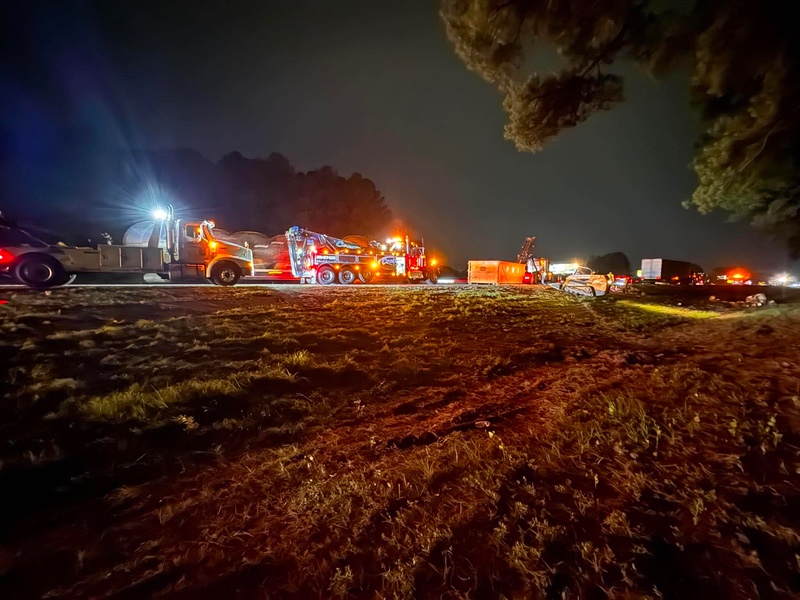
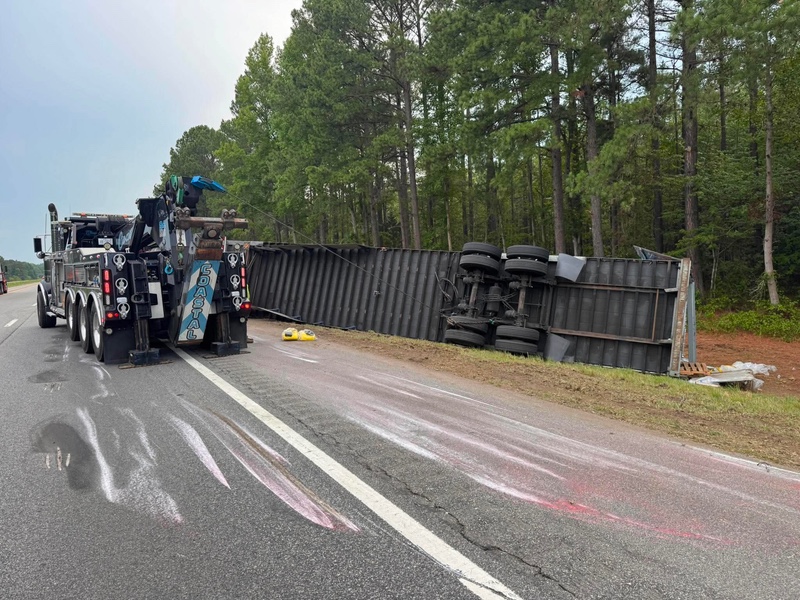
At about 3:30 p.m., North Carolina Highway Patrol contacted us about a loaded tractor trailer that had rolled onto its side on southbound I-95 near mile marker 147 in Gold Rock, North Carolina. A loaded commercial truck on its side called for a coordinated response, so we dispatched equipment for Rocky Mount heavy duty towing along with the crew needed to handle cargo, rigging, transport, and cleanup.
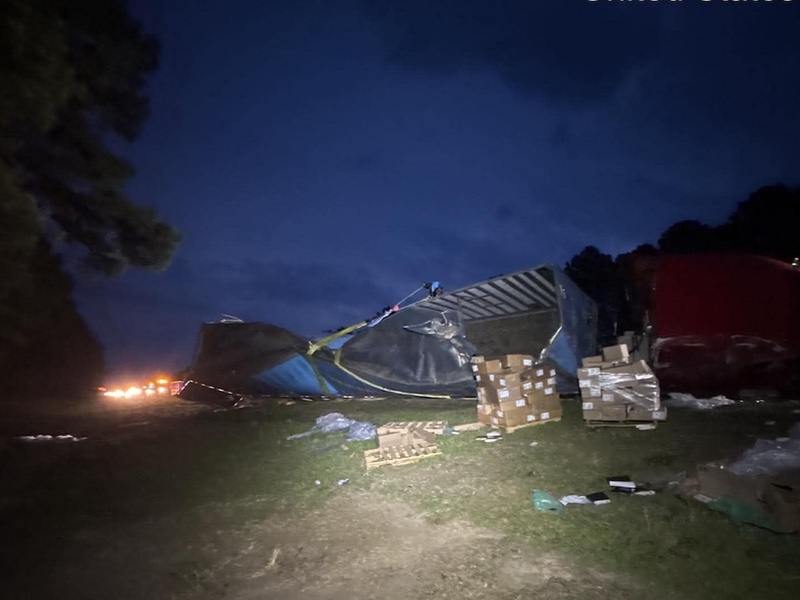
The tractor trailer was hauling 42,500 pounds of books to a warehouse in Garner. Recovering the vehicle meant dealing with the load first. NC DOT gave our crew a two-hour window to remove cargo before the rollover recovery could move ahead.
Unloading the Books Before the Roll
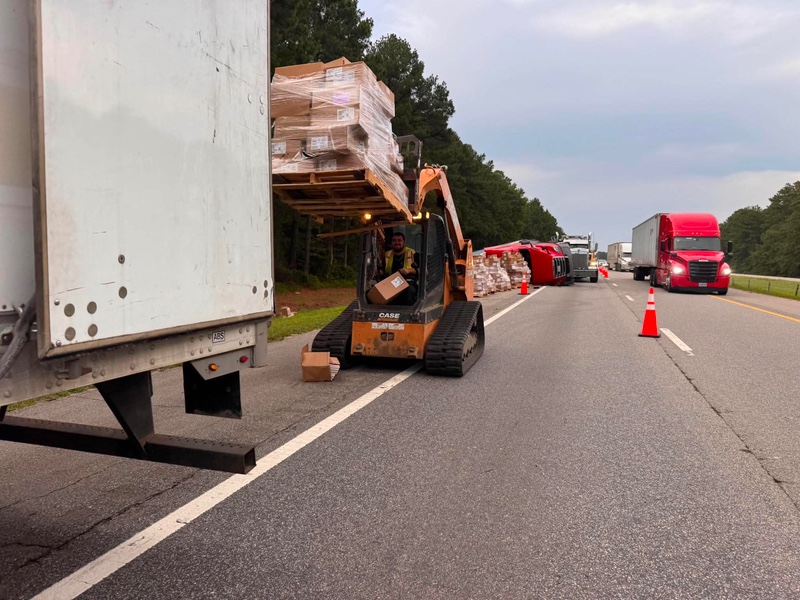
Our eight-person crew started by hand unloading boxes from the overturned trailer. We stacked the books onto pallets, wrapped the salvaged freight, and transferred it into our 53-foot dry van for storage. In that two-hour window, we salvaged about 85 percent of the load.
That cargo work mattered because 42,500 pounds changes the way a trailer reacts during recovery. For this Rocky Mount heavy duty towing call, unloading the trailer gave us a better chance to control the roll and reduce damage. It also kept the job moving inside the time limit set for the scene.
Three Wreckers With Three Jobs
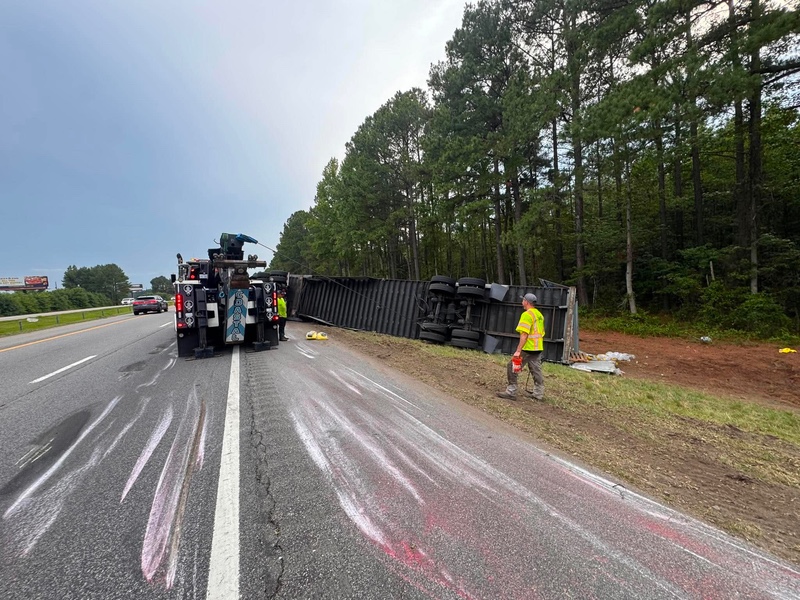
We brought three wreckers, a medium-duty rollback, a skid steer, a wreck scene service truck, and the dry van. Each unit had a clear purpose. The 50-ton wrecker worked from the trailer, the 35-ton wrecker worked at the tractor and helped spike the front end down, and the 20-ton wrecker assisted from the rear of the trailer.
The main equipment on scene included:
- 50-ton heavy wrecker
- 35-ton heavy wrecker
- 20-ton wrecker
- Medium-duty rollback
- Skid steer with 4-in-1 bucket and forks
- Wreck scene service truck
- 53-foot dry van for salvaged cargo
That mix gave our crew the control needed for a loaded rollover.
Rigging, Rolling, and Moving the Tractor Trailer
With the books cleared, we moved into the recovery stage of the Rocky Mount heavy duty towing job. The wreckers were positioned so the trailer, tractor, and rear section could be controlled during the roll. Nobody wants a trailer snapping back, dragging across pavement, or shifting harder than expected once tension comes on the lines.
Once everything was rigged, the crew coordinated the pull and brought the tractor trailer back onto its wheels. After the unit was upright, we hooked it to the 35-ton wrecker and towed it back to our yard. The damaged truck was gone, but the scene still needed work.
Cleanup Was Part of the Recovery
A rollover with boxed cargo leaves a mess. Damaged books, torn packaging, broken pallets, and road debris had to be picked up before traffic could return to normal. Some of the crew handled the tow while the rest stayed back with the skid steer and wreck scene truck.
This Rocky Mount heavy duty towing response took about four hours from first arrival through final cleanup. We loaded debris into a dumpster, checked the work area, and kept going until both lanes of I-95 were ready to reopen. On a highway scene, the last sweep matters because small debris can still create problems for passing traffic.
Coastal Towing Handles Rocky Mount Heavy Duty Towing and Recovery
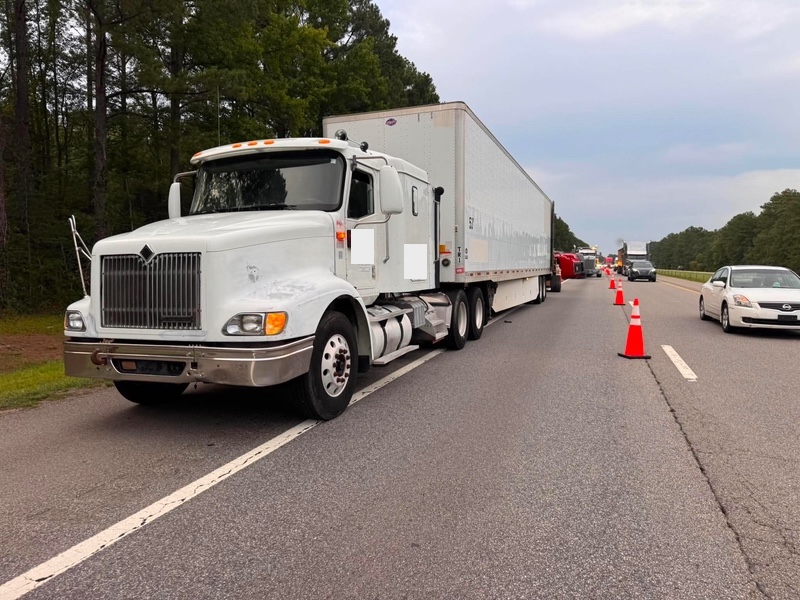
Coastal Towing handles light, medium, and heavy-duty towing, along with semi truck recovery and roadside service. Our team brings more than 80 years of combined hands-on towing experience, and we have served North Carolina motorists and commercial operators for decades. For this Rocky Mount heavy duty towing response, we had the wreckers, cargo-handling equipment, dry van, and crew needed to work several parts of the scene at the same time.
Our Rocky Mount heavy duty towing work includes tractor trailers, loaded commercial vehicles, wreck recovery, cargo handling, and highway cleanup. This I-95 job involved 42,500 pounds of books, three heavy wreckers, a skid steer, a dry van, and an eight-person crew. By the time we left Gold Rock, the truck was off the highway, most of the cargo was saved, the debris was collected, and both lanes were open again.
FAQs
Why does cargo need to be removed before uprighting a trailer?
Cargo can shift during the roll and make the trailer harder to control. Removing weight helps lower strain on the trailer, rigging, and recovery trucks. It can also help save freight that may still be usable.
Who decides when a highway lane can reopen after a wreck?
Law enforcement or transportation officials usually make that call. The recovery crew clears the truck, cargo, fluids, and debris so the roadway can be inspected before traffic returns.
What does a skid steer do during a rollover cleanup?
A skid steer can move broken pallets, loose freight, packaging, dirt, and debris faster than a crew can by hand. Forks can also help move palletized cargo once it is stacked.
Can freight still be saved after a tractor trailer rolls over?
Yes, some freight can often be saved if it is not crushed, soaked, contaminated, or scattered too badly. Crews usually separate damaged freight from items that can be wrapped, loaded, and stored.
Why can’t crews just pull a loaded trailer upright right away?
A loaded trailer may twist, tear, or shift hard if the weight inside is not controlled first. The cargo can also make the rollover more dangerous for the crew and equipment.
What should a driver report after a loaded truck rolls over?
Give the exact location, trailer type, load weight, cargo type, leak concerns, and lane blockage. Photos can help dispatch send the right trucks and support equipment.