What a Single Tire Failure Can Do
We often take calls like this: the driver says he has a flat on the drive axle and just needed a quick tire swap. When we pull up, the tire it gone, the rim is ground down to bare metal, and a chunk of mudflap bracket wrapped itself around the brake chamber. The truck isn’t going anywhere without a solid Rocky Mount semi towing job, and the driver knows it the second we step out.
A blown tire on a loaded tractor-trailer doesn’t just leave rubber on the road. At 65 miles per hour, shredded tread can tear through air lines, rip off ABS sensors, snap mudflap mounts, and bend suspension brackets. By the time the driver gets stopped, the damage has already spread to parts that have nothing to do with the wheel itself.
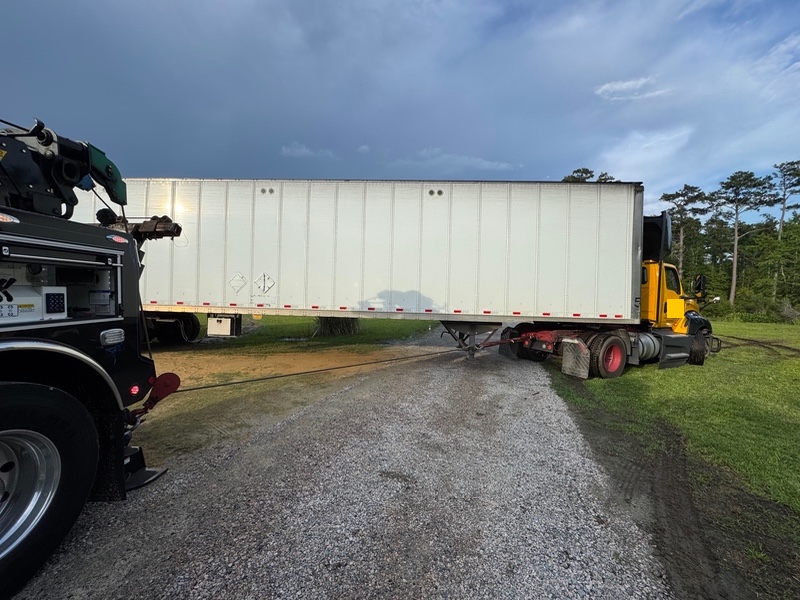
The Real Damage Happens After the Blowout
Most drivers don’t realize how far a tire failure can reach. A clean blowout on a wide shoulder might only need a service truck and a spare. But we see plenty of calls near Rocky Mount where the tire took out more than just itself.
Rubber wraps around the axle and locks up the wheel. A brake line gets sliced and the truck loses air pressure. A bent bracket drags on the rim and carves through the hub. We’ve pulled semis off NC 43 where the driver thought they could limp to the next truck stop, only to stop again two miles later with a locked axle and twice the repair cost.
Why Changing the Tire Doesn’t Always Fix the Problem
A service truck can handle a tire swap if the rest of the truck still works. That means the brakes release, the air system holds pressure, and the rim rolls straight. On a clean shoulder off I-95, that setup works fine.
But near the US 64 and US 301 interchange, or on the narrow shoulders along NC 97, there’s not always room to work safely. And if the tire failure damaged the brake system or steering, a new tire won’t solve anything. That’s when Rocky Mount semi towing becomes the right move instead of trying to patch it roadside.
What We Check Before We Hook Up
Before we decide to tow, we need to know what still functions. Can the truck build air pressure? Do the brakes release when they should? Is the rim straight enough to roll without grinding? Does the steering work without metal scraping against metal?
A few things tell us what kind of move we’re looking at:
- Which tire blew and what it hit on the way down
- Whether the trailer is loaded or empty
- If the truck is blocking traffic on US 64 or I-95
- Where the fleet wants the unit delivered
- If another tractor is coming to pick up the trailer
A tire call during afternoon traffic near Rocky Mount can go sideways fast. Rocky Mount semi towing is less about the tire and more about getting a disabled rig out of a bad spot before heat, traffic, and more damage turn it into a bigger mess.
Loaded Freight Changes How We Move the Truck
An empty trailer gives us options. A loaded reefer, flatbed, or tanker narrows the plan in a hurry. The freight might need to keep moving, or the fleet might want the whole combination taken to a shop before anyone breaks the set.
That’s why Rocky Mount semi towing after tire damage starts with the load as much as the mechanical failure. If the tractor can’t move but the trailer is fine, a swap might work. If the trailer took damage too, we may need to move the entire combination together without splitting anything.
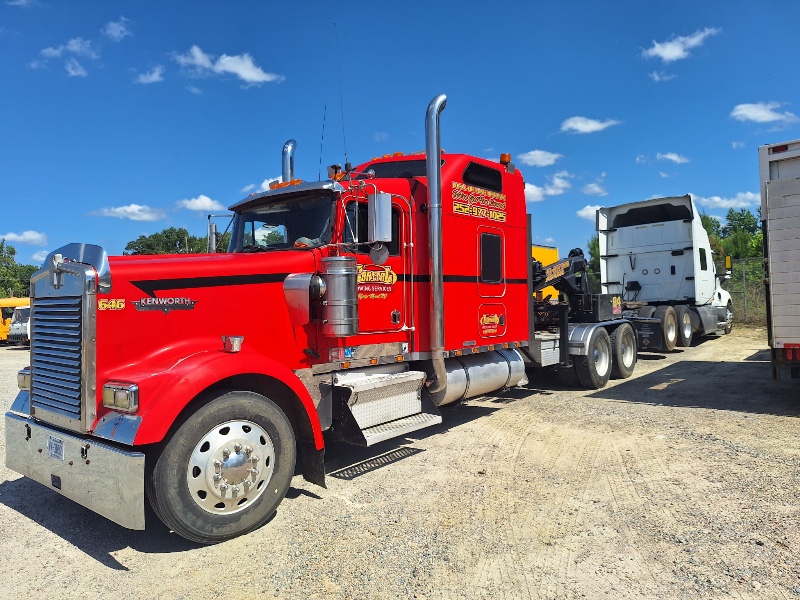
How Coastal Towing Handles Rocky Mount Semi Towing After Tire Failures
Coastal Towing has been part of North Carolina’s towing infrastructure since 1958, and we’ve handled heavy-duty recovery work in Rocky Mount and the surrounding area for decades. Our fleet includes rotators, heavy wreckers, and tractors set up for towing and hauling loaded combinations. That range helps our Rocky Mount semi towing team respond when a tire failure spreads into brake damage, air loss, or a disabled tractor-trailer blocking traffic.
We also pay attention to who we send on these calls. Our operators train with experienced drivers and spend time learning how trucks are built, from air systems and brakes to weight transfer during hookup. On Rocky Mount semi towing calls near US 64, I-95, NC 97, and US 301, the right move protects the truck from more damage while clearing it out of traffic as fast as possible.
FAQs
Can a blown truck tire damage the brake chamber?
Yes. Shredded rubber can wrap around the axle or strike the brake chamber hard enough to damage fittings, hoses, or mounts. If air starts leaking, the truck should not keep moving.
Why does a semi lose air after a tire failure?
A tire can tear through air lines, brake hoses, or fittings near the wheel area. Once that happens, the system may not hold enough pressure for the brakes to release correctly.
Is it safe to drive a semi on a damaged rim?
No. A damaged rim can grind into the road, overheat nearby parts, and damage the hub or brake drum. Even a short drive can turn one repair into several.
What should a driver check from a safe distance after a blowout?
Look for hanging hoses, loose wiring, bent brackets, smoke, leaking fluids, and parts rubbing near the wheel. Stay away from traffic while checking.
Can a loaded trailer be moved after the tractor is disabled?
Sometimes. If the trailer is still in good shape, another tractor may be able to pick it up. If the trailer has brake or air damage, the whole combination may need to move together.
What information helps dispatch send the right truck?
Share the nearest marker, travel direction, failed tire position, trailer type, load status, and visible damage. Photos of the wheel area are helpful.