Stuck Between a Rock and a Soft Place
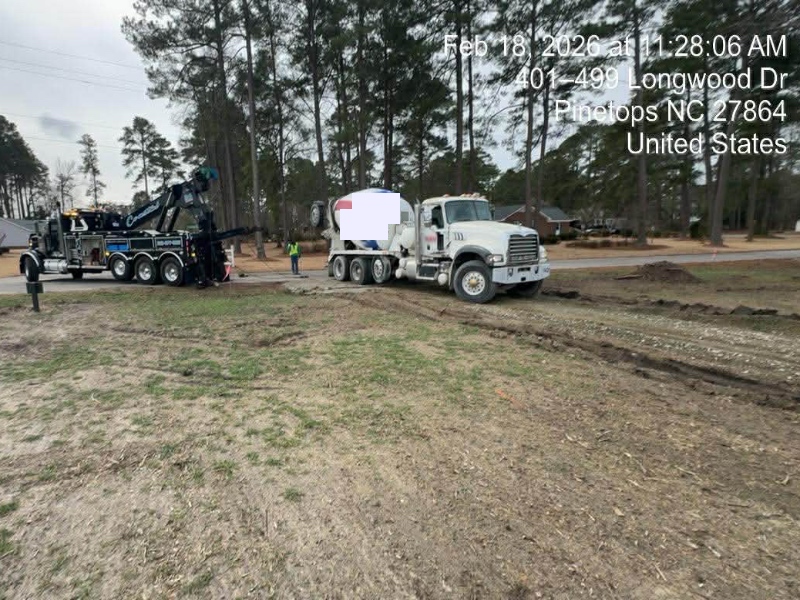
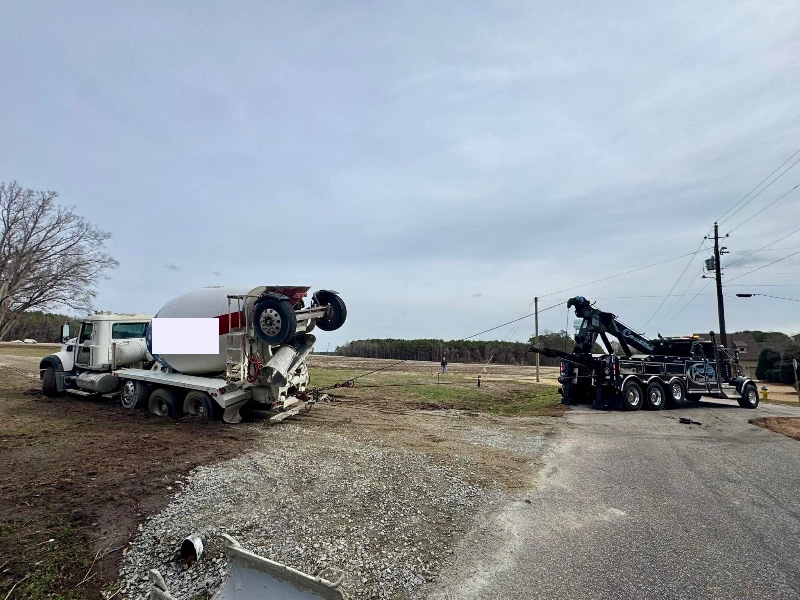
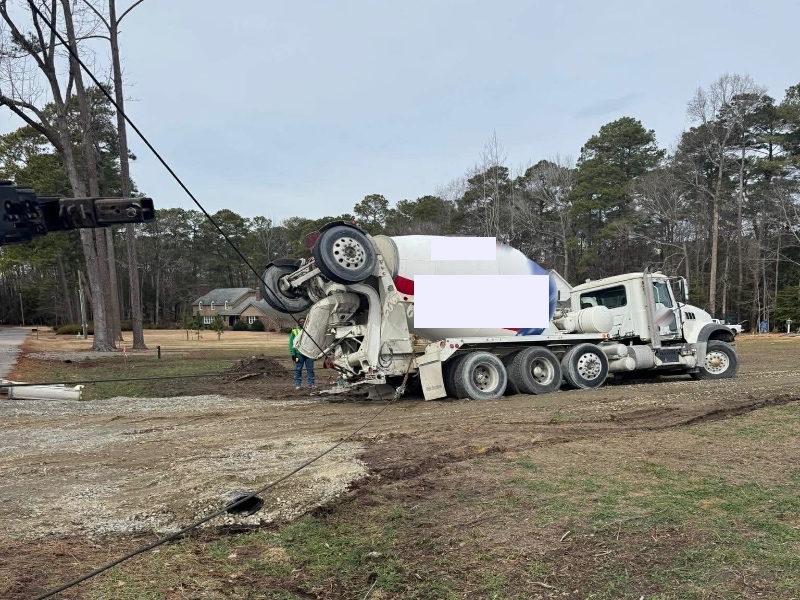
Mud has a talent for grabbing heavy trucks like it’s getting paid by the pound. A fully loaded cement mixer found that out the hard way when it slid off the construction entrance and settled into the soft shoulder. Every attempt to drive out sank it deeper, so the smartest move was to stop, call our heavy equipment towing team, and let the ground quit winning.
This one sat on private property near US-42, with no police or fire on scene. With one tow truck operator dispatched, the plan had to be tight from the first walk-around, because wet soil doesn’t forgive rushed setups.
What We Saw When We Rolled Up
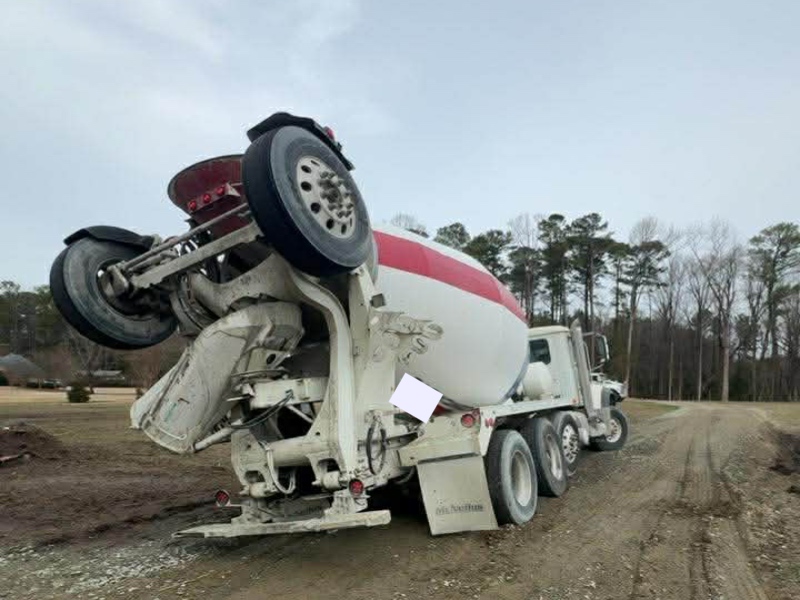
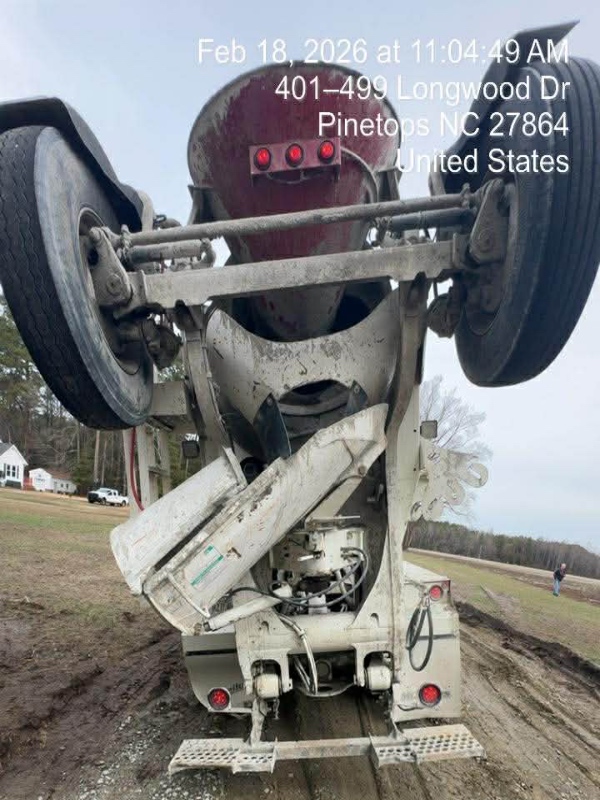
We found the 72,000-pound cement mixer sitting low on the soft side, with the wet soil acting like quicksand. The driver did the right thing by calling before the situation got worse, because spinning tires and heavy loads mix poorly with mud.
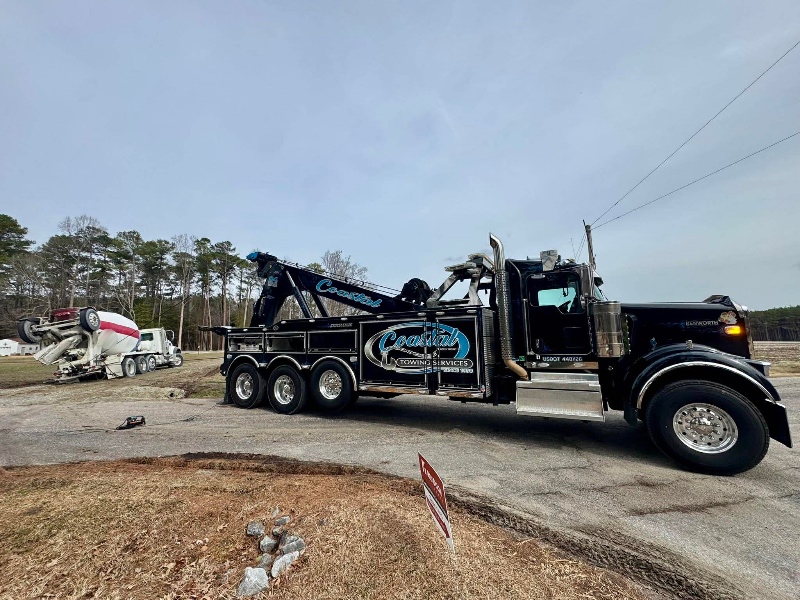
We walked the area first and picked a spot for our 50-ton heavy wrecker that would hold firm. We also kept an eye on the nearby home and the entrance path, since the last thing anyone needs is torn-up property or a second vehicle stuck in the same soup.
Choosing a stable setup point
We look for ground that supports the wrecker’s weight and the pull we’re about to apply. We also check for slope, soft spots, and anything that could shift once tension hits the line. That early decision controls everything that follows.
The quick checklist we run on site
Before we hook a single thing, we run through a short list that keeps the job tidy:
- Check soil firmness and where the shoulder starts to fail
- Pick anchor and wrecker position with clear pull path
- Confirm attachment points on the disabled unit
- Plan line angles to control roll and drift
- Talk the driver through neutral and brake timing
Rigging the Pull and Controlling the Mixer
Once we chose our setup point, we ran rigging to the mixer and built the pull for strength and control. We used two snatch blocks: one to redirect the cable into a low line, and one to two-part our other line so we could increase pulling power without asking the cable to do more than it should.
We had the driver place the truck in neutral, then we winched slowly to “walk” the mixer out of the hole it had sunk into. Then, we also used a high line to the low side of the chassis to prevent rollover risk, and we used the low line to pull down on the high side, which helped keep the mixer tracking the way we wanted.
Why we two-parted the main line
A two-part line gives us more pulling capacity and better control over the load. It also reduces strain on the line during the hardest part of the recovery, which is the first few inches of movement. Line angles can push a heavy unit sideways or encourage a lean if we ignore them. Our Pinetops heavy equipment towing high line and low line worked together to keep the mixer steady while it climbed back onto firm ground. Once the truck breaks free from the suction of mud, the job usually settles down fast.
Back on Firm Ground With Coastal Towing Services’ Pinetops Heavy Equipment Towing
We got the mixer out and back on the road within about 30 minutes of arriving. And we did it without tearing up the property or adding new damage to the truck. That’s what Pinetops heavy equipment towing looks like for us on a wet day: choose a solid staging spot, build the pull to match the load, and control the movement from the first click of tension to the last foot of travel.
We handle Pinetops heavy equipment towing for situations like this one, plus winch-outs, load shifts, and heavy recoveries that need careful control on soft ground. We bring the 50-ton heavy wrecker, the rigging to build clean line paths, and a process that stays calm under pressure. If a big truck sinks, slides, or stops where it shouldn’t, Pinetops heavy equipment towing is the work we show up ready to do. Our team always keeps it practical. From start to finish with Pinetops heavy equipment towing that fits the scene instead of forcing the scene to fit us.
FAQ
What should a driver do first when a heavy truck sinks in soft ground?
Stop trying to power out. Set the brakes, stay on firm footing, and call for recovery help. Spinning tires usually digs the truck deeper and can twist the frame or bury the axles.
Can you pull a fully loaded commercial truck without unloading it first?
Often, yes, as long as the recovery plan matches the weight, ground conditions, and attachment points. A controlled pull with the right line angles can move the truck safely without dumping the load, but the operator decides after an on-site assessment.
How do recovery operators increase pulling power without using a bigger wrecker?
They can re-rig the winch line to multiply pulling force, commonly by using a block setup that changes the mechanical advantage. That approach increases control and reduces strain on the equipment when done correctly.
Why do recoveries sometimes use more than one line?
Multiple lines help control movement, not just pull. One line can handle forward motion while another stabilizes the vehicle to limit lean, side drift, or sudden shifts as it climbs out of ruts.
How long does a heavy recovery usually take?
It depends on access, ground firmness, weight, and how deep the vehicle sits. Simple winch-outs can take under an hour, while complicated recoveries may take several hours if rigging, site protection, or cleanup adds steps.
What information helps a towing company prepare before arriving?
Share the vehicle type, approximate weight, load status, what the tires are sitting in, and whether the site has room for a large tow truck to set up. Photos of the scene and a clear access route help the dispatcher send the right equipment on the first trip.